About twenty to twenty five years ago, I used to play an online role playing game called Guild Wars. Players could create characters in a variety of classes, and one type I always thought was interesting even though I was never good at it was the Assassin. Their abilities allowed them to blink into existence near an enemy, unload a burst of damage, and jump back out before anyone could touch them. They had to play that way because they were so fragile that they couldn’t normally survive more than a few hits, so their whole strategy was to avoid damage or die. When you timed it right, it felt like magic, but one mistake and you were gone.
I have been thinking about that lately because I see a version of it in the way people build their inner worlds. Most of us don’t inherit a full belief system or a complete understanding of anything. We inherit pieces. Pieces of faith, pieces of tradition, pieces of identity, pieces of all the ways we learned to cope. We take those pieces and arrange them around ourselves like armor because that is what we were taught to do. But pieces are not a structure. They do not hold themselves up or connect the way they were meant to. So we end up holding them together with our own hands, trying to keep the shape of something that once had an inner framework we were never given.
That is why it feels so fragile. It’s not that we’re weak. It is that we are carrying something that was never meant to be carried this way. And when your hands are busy keeping the old pieces from falling apart, you can’t reach for anything new. You cannot grow because you are too busy maintaining the shape of what you were told was the whole truth. Sometimes the only way to move forward is to let the old shell crack. Not because it failed, but because you have outgrown the shape it was holding you in. Growth doesn’t feel like expansion from the inside. It feels like pressure. It feels like something giving way. It feels like losing pieces you thought you needed, only to realize they were meant to be shed.
Most people do not know any of this is happening. They aren’t hiding fragility. They are simply living inside the only version they were ever taught. But there are always a few people who do understand the thinness, the missing pieces, the gaps. They can feel how easily the whole thing could fall apart, and instead of naming that truth, they learn to use it. They learn to hit hard because they know the structure cannot take a hit, to speak with certainty because they know the belief underneath it is delicate, to guide people toward comfort because comfort keeps questions away. Not everyone does this, but the ones who do often end up shaping the entire environment around them.
The people who follow them don’t usually sense any of this. They think they are standing on solid ground. They think their pieces are the whole system. They think everyone else learned the same things, understands the same things, and will reach the same conclusions. They assume their normal is universal. They assume their patchwork is the real thing. They assume their substitutions are shared. And when they discover that someone else’s inner world is different, it feels like a threat. It feels like the ground shifting under their feet. It feels like the beginning of collapse.
That is why questions feel dangerous. That is why uncertainty feels like betrayal. That is why people cling so tightly to what they were given. They are not protecting truth. They are protecting the only structure they have ever known, even if it is only a handful of pieces they have been holding together by hand. And when someone has spent their whole life gripping those pieces, the idea of letting them fall feels like death. It feels like losing everything. It feels like the world is coming apart.
Sometimes supremacy grows out of that place. Not strength. Not clarity. Just the ego trying to hold itself together with whatever pieces it has left. And under the right conditions, that fear hardens into hierarchy. It is the mind saying I cannot survive being wrong, so everyone else must be inferior.
And you can find it in various aspects of our culture, such as politics, religion, even our coping mechanisms. It is identity, it is habit, it is the entire emotional ecosystem we have built in this country. Everyone is carrying a different set of pieces. Everyone is filling the gaps with whatever they already understand. Everyone thinks their version is the real one. And because no one realizes how different their inner worlds are, we end up talking past each other, judging each other, fearing each other, and mistaking our own patchwork for universal truth.
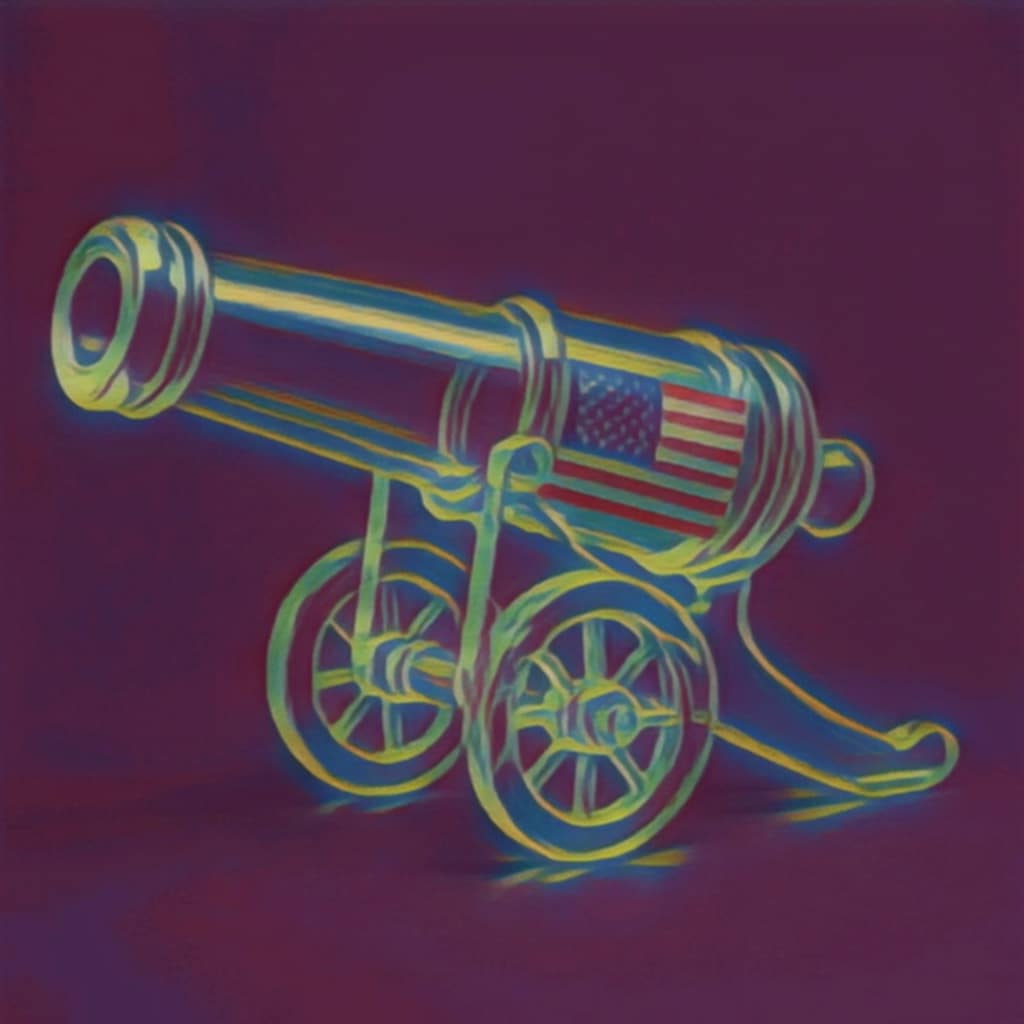
But the moment the shell cracks is not the moment a person fails. It is the moment they finally get a chance to breathe. It is the moment they can stop performing certainty. It is the moment they can stop pretending they are standing on solid ground when they have been balancing on fragments all along. It is the moment they can stop firing like a glass cannon and start learning how to actually stand. Collapse is not the end. It is the beginning. It is the first honest moment. It is the place where understanding can finally grow. It is the place where living becomes possible again.
And that is what I hope to offer with anything I write, not certainty and not superiority, but a little more clarity about where we are. Because once you can see the ground beneath you, even if it has just cracked open, you are no longer moving in the dark. You can see what you inherited. You can see what you have been holding together. You can see what no longer fits. And once your eyes are open, even a little, you have more power than you did before. You can choose your next step. You can build something real. You can move.
Leave a Reply