In America, Christianity is woven so deeply into everyday life that many native‑born Americans don’t realize how integrated it actually is. “In God We Trust” is printed on the money. Most public schools build their calendars around Christian rhythms. Even the language of public life defaults to Christian framing, like the way we talk about politics (“moral values”), grief (“they’re in a better place”), and wrongdoing (“forgive and forget”). It feels natural, familiar, unquestioned, so normal that many people don’t see it at all.
Some say Christianity is a genuine spiritual tradition that is sometimes manipulated by powerful people to convince those they oppress that their suffering is meaningful. Others insist that Christianity itself was shaped to keep those who were enslaved, abused, and exploited quiet with promises of reward in the next life.
Neither explanation fully captures what happened in America. The question is not whether Christianity was born as a tool of control or born pure and later corrupted. The reality is that American Christianity evolved into a system that subconsciously needs suffering to make sense of itself. It is a structure that turns pain into purpose, obedience into virtue, and injustice into something that feels normal.
Once you see that, the next part becomes unavoidable. A salvation‑based system has emotional physics. It needs people to feel broken so it can offer repair. It needs people to feel unsafe so it can offer protection. It needs people to feel lost so it can offer direction. A system built on rescue quietly depends on someone needing to be rescued. And a system built on chosenness quietly depends on someone else being rejected.
When you understand that, you start to notice how suffering stops being a tragedy and becomes a resource. It becomes something the system quietly relies on to keep its identity intact.
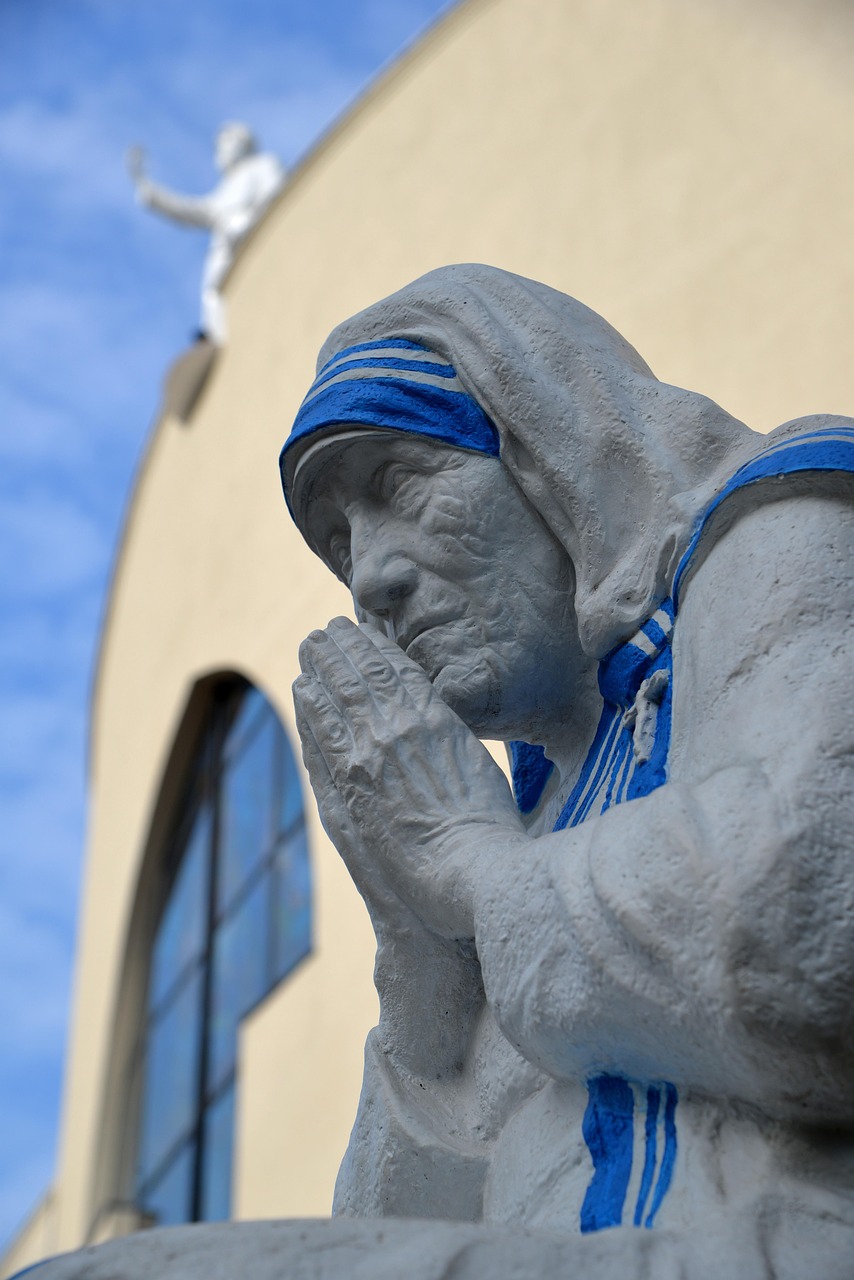
Mother Teresa is a clear example of this dynamic. She spoke often about the spiritual value of suffering. She said things like “Suffering is a gift from God” and described the poor accepting their pain as being “beautiful,” something that mirrored Christ’s Passion. In her clinics, pain was not something to be relieved but to be sanctified. Volunteers reported that pain medication was withheld even when available because suffering was seen as spiritually purifying.
But when Mother Teresa herself became ill, she received modern medical treatment and pain management. She did not personally embrace the level of untreated suffering she encouraged for the poor. This is not simple hypocrisy. It is structural. Her authority depended on the poor remaining in pain. If they stopped suffering, she stopped being necessary. Her role as the saint, the savior, the interpreter of suffering only existed as long as someone else was hurting.
Mother Teresa was not the only one who benefited from this playbook. You can see the same emotional physics in modern American politics, where even dominant groups frame themselves as under attack. The “war on Christmas” is a clear example. Christmas is a federal holiday, widely celebrated, culturally reinforced, and commercially unavoidable, yet it is still described as endangered. The power of the narrative is not in its accuracy but in the identity it creates. Feeling threatened becomes a way to feel central, righteous, and justified.
This is where the connection to the MAGA worldview reveals itself. The emotional logic is the same. Their identity depends on being the real Americans. Their morality depends on being the good people. Their safety depends on being the ones under attack. Their unity depends on having an enemy. If everyone were equal, safe, and unafraid, the entire worldview would lose its meaning.
So the system, not necessarily the individuals, gravitates toward fear, hierarchy, and conflict. They feel safest when someone else is unsafe. They feel righteous when someone else is wrong. They feel chosen when someone else is condemned. They feel morally central when someone else is morally suspect.
You can even see the difference in the kinds of protests America produces. Movements for equality ask to be treated the same as others. Movements rooted in grievance ask to be treated as superior. The emotional physics are not the same.
Mother Teresa needed the poor to suffer so she could be the one who interpreted their suffering. MAGA needs others to feel unsafe so they can feel like the protectors, the righteous, the superior. Both systems turn someone else’s pain into their own moral purpose. Both rely on hierarchy to feel stable. Both collapse if everyone becomes safe, equal, and unafraid.
Once you see this, the pattern becomes impossible to unsee. American Christianity maintains itself through three quiet mechanisms.
Silencing: dissent becomes disrespect, critique becomes hostility, awareness becomes rebellion.
Normalization: Christian comfort becomes the default, everyone else becomes the disruption.
Superiority: privilege becomes blessing, comfort becomes virtue, inequality becomes God’s plan.
None of this requires cruelty. It only requires meaning. When suffering is spiritualized, the people in pain stop being seen as people. And the people who benefit from the hierarchy stop seeing the hierarchy at all.
A system built on salvation cannot survive a world where people feel whole. So it keeps people unwhole, not through force, but through the meanings it assigns to pain. Understanding the structure changes your place inside it. Once you see how it works, what follows is what reveals who you are.

Leave a Reply