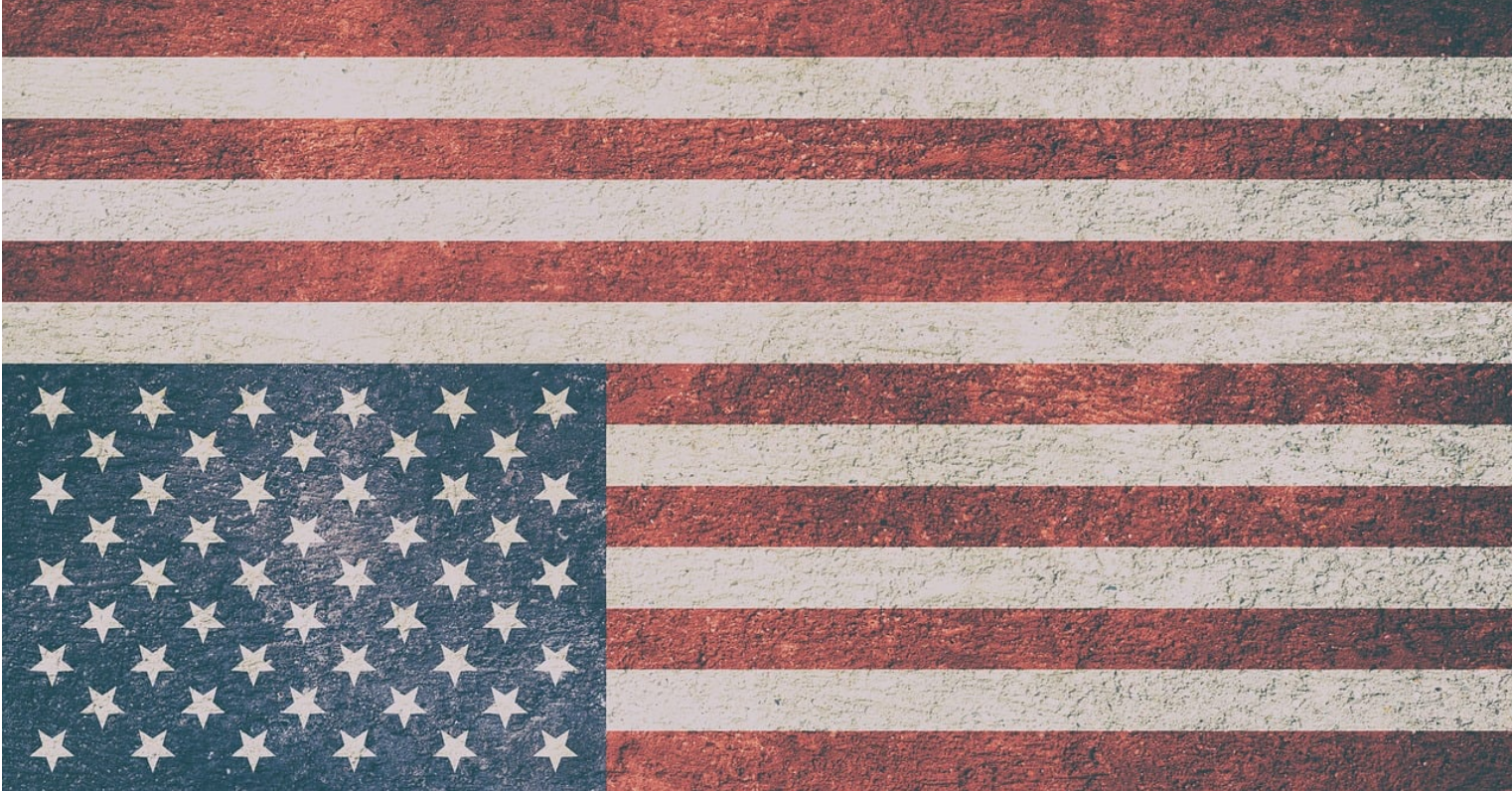
It was July Fourth in the late ’80s. My parents had taken me to see a fireworks show. As rockets lit up the sky, I remember hearing Lee Greenwood’s “God Bless the USA.” A surge of belonging washed over me with the belief that being an American was the highest honor. Today, we live in a land where seven deadly sins parade on live TV with barely a raised eyebrow, yet one misstep can obliterate your reputation. Speaking up about any hypocrisy quickly earns you a label: un-American. Yet I believe it’s not just possible, but mandatory to love this country deeply while insisting it become truer to its highest ideals. In order to examine this, we need to go back to 1984.
That was the year of Prince’s “When Doves Cry,” Eddie Murphy broke through in Beverly Hills Cop, and Ronald Reagan’s re-election pumped new fervor into a nation still echoing from Vietnam and Watergate. Artists like Dolly Parton and Johnny Cash gave voice to faith, family, and sacrifice. Greenwood drew on his National Guard background to personify the citizen-soldier archetype. “God Bless the USA” was released that October. The song promised gratitude for peace alongside vigilance for freedom. Over the decades, it has reemerged after national moments of reflection, such as 9/11, hurricanes, and political triumph. Each time the song reaffirmed its role as a collective benediction. Yet precisely because of that power, the anthem is sometimes elevated to a status where its surface-level sentiment masks the deeper, more demanding realities of patriotism.
Greenwood’s anthem unfolds in two verses and a refrain that doubles as chorus and creed.
“If tomorrow all the things were gone I’d worked for all my life
And I had to start again with just my children and my wife
I’d thank my lucky stars to be living here today
‘Cause the flag still stands for freedom, and they can’t take that away”
That verse leans on broad strokes, but it never digs beneath the surface. You get the notion of “I’d still be grateful,” but nothing anchors that gratitude in real tension or contradiction. It’s sentiment without any friction to make it stick. While everything that he says may be true, there is no depth to any of it. What makes those lines feel hollow is precisely what gives deeper lyrics their power: specificity. We don’t learn what the singer built or lost, why the flag matters in times of hardship, or how “freedom” looks and feels when he’s down to his boots and bedrock. Instead, the flag stands in as a one-size-fits-all symbol, untouchable by doubt or debate.
“And I’m proud to be an American, where at least I know I’m free
And I won’t forget the men who died who gave that right to me
And I’d gladly stand up next to you and defend her still today
‘Cause there ain’t no doubt I love this land
“Freedom” is a theme throughout the song, but it is never defined: it’s just stated as a fact. Are we free from tyranny, free to vote, free to dissent? The song doesn’t say, letting listeners project their own meaning. When it nods to “men who died, who gave that right to me,” it flattens a complex history of hundreds of years of people who paid the ultimate price for their beliefs. All the frontline soldiers, civil-rights martyrs, imprisoned dissidents, and more merge into a single, uncontroversial storyline. By erasing the messy, inconvenient struggles that actually secure freedom, the song sanitizes patriotism into an easy rallying cry, inviting applause without ever challenging us to reflect on what true sacrifice and liberty really demand.
“From the lakes of Minnesota to the hills of Tennessee
Across the plains of Texas, from sea to shining sea
From Detroit down to Houston and New York to L.A.
Well, there’s pride in every American heart
And it’s time we stand and say.”
The second verse functions as an emotional placeholder. It could swap out locations, rephrase the sentiment, even say nothing at all, and it would still generate the same reaction. It exists purely to build momentum, not meaning. By listing places across the country, it creates the illusion of inclusion without actually defining what unites them beyond shared borders. The final line positions the listener for the payoff: the declaration that freedom is under threat and must be defended. But defended from whom? From what? The song never says, because specificity would complicate the clean, celebratory framing. Instead, it primes the audience to cheer, to feel justified in their patriotism, without ever questioning the depth or cost of the ideals being invoked. It’s less a reflection on national identity and more an orchestrated rallying cry; a smooth, feel-good mechanism designed to inspire allegiance without demanding thought.
The chorus repeats twice and… that’s it. You’ve got the whole song. All together, it’s just over three minutes long. It gestures at emotion, waves the flag, and invokes sacrifice, yet it never defines, questions, or complicates any of those ideas. It works because it doesn’t ask the listener to engage, only to agree. It isn’t about wrestling with what patriotism means; it’s about feeling patriotic. And that’s why it endures, because it reassures, not because it challenges or provokes. It’s a song built for the easiest applause.
Don’t feel guilty for letting it make you feel good. It’s not a bad song and the message is not wrong. Musically, the song’s major chord progression keeps it simple and resolute, reinforcing a triumphant, marching feel. In the final repeat of the chorus, the snare drum mimics military cadences, and you get a measure expanded by an extra count after the words “stand up” with a resounding cymbal crash for extra emphasis. When it’s played in public, crowds are usually yelling and applauding so uproariously during Greenwood’s final sustained note that they drown him out. It works every time, reminding crowds of our advantages and urging us not to waste them; but it never tells us how.
Throughout history, pride has worn two faces. They have been called many things by different cultures throughout the years. Aristotle named them megalopsychia and hubris: the former a justified honor in one’s worth, the latter an overreach that erodes community bonds and courts downfall. Modern psychology speaks of authentic pride versus hubristic pride—one nurturing confidence and community, the other breeding arrogance and division. Biblically, justified pride bows in gratitude to God and neighbor, whereas unjustified pride exalts the self and blinds us to our duty. No matter what you call it, pride can be a virtue or a vice. Today, with hubristic pride on the rise, we’ve begun to brand every political dissent as disloyalty.
Yet in this fractious era, we’ve all felt the tension. A quick glance at the headlines can feel like stepping into a minefield, and even everyday conversations risk exploding. Maybe at Thanksgiving, you bit your tongue as your uncle launched into conspiracy theories, or during a break you almost spit out your coffee when a coworker said something that you felt lacked empathy. I’d wager that in the last ten years you’ve quietly severed ties with at least one person because you felt like your morals no longer aligned. Maybe you even blew up at someone over it. I have, and frankly, I’m not proud of it.
We’ve come to wear our convictions like armor polished, immovable, and too often wielded as weapons. Pride in our beliefs has morphed into pride against each other. We’ve built echo chambers where certainty replaces empathy, and the walls we construct around our ideals become the very barricades that keep us from bridging divides. In trying to defend our moral ground, we’ve sometimes scorched the earth around us. It’s a pride that feels righteous in the moment but leaves us lonelier, angrier, and further from the unity we claim to cherish.
Greenwood’s anthem still swells stadiums with gratitude and solidarity, yet genuine patriotism demands more than an easy chorus. To bless America is to align our deeds with higher commands: sheltering the vulnerable, pursuing justice, upholding truth, and defending the Constitution’s promise of liberty for all. When policy and practice betray those ideals, we reveal a national dissonance between claim and conduct. Our true act of freedom isn’t just singing; it’s letting our lives echo our lyrics so that every chorus rests on moral integrity, not just empty phrase.
Leave a Reply